
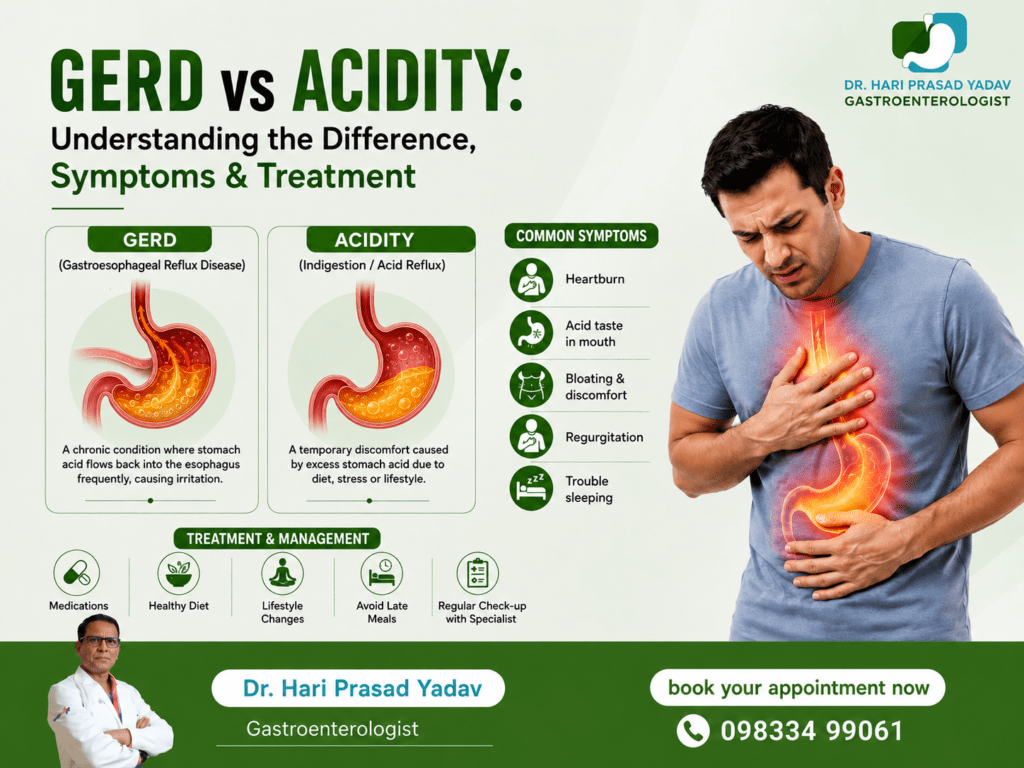
Many people experience heartburn, acidity, sour taste, or a burning sensation in the chest after eating. These symptoms are often considered ordinary acidity, but frequent or persistent symptoms may indicate Gastroesophageal Reflux Disease (GERD). Understanding the difference between GERD and acidity is important because both can produce similar symptoms while differing in their causes, frequency, severity, and possible long-term effects. Timely GERD Treatment in Indore can help manage persistent reflux symptoms and reduce the possibility of complications.
Occasional acidity may occur after overeating, spicy or fatty meals, excessive caffeine, or lying down soon after eating. GERD involves repeated movement of stomach contents into the esophagus and may cause recurring heartburn, acid regurgitation, swallowing difficulties, or throat-related symptoms. Appropriate Acidity Treatment in Indore depends on the frequency and cause of symptoms, while persistent reflux may require a more detailed evaluation.
At Dr. Hari Prasad Yadav’s Gastroenterology Clinic, Indore, patients receive evaluation and treatment for GERD, acidity, acid reflux, gastritis, ulcers, liver disorders, pancreatic conditions, and other digestive problems. Dr. Hari Prasad Yadav provides Gastroenterology Treatment in Indore using medical evaluation, advanced diagnostic procedures, and minimally invasive endoscopic techniques. His expertise includes ERCP, Endoscopic Ultrasound (EUS), Upper GI Endoscopy, Colonoscopy, Capsule Endoscopy, Enteroscopy, Fibroscan, and therapeutic endoscopy.
Best Gastroenterologist in Indore – Dr. Hari Prasad Yadav
Persistent digestive symptoms can affect eating habits, sleep, work, and everyday activities. Frequent heartburn, acid regurgitation, difficulty swallowing, recurrent indigestion, abdominal discomfort, or chronic cough should not always be assumed to be simple acidity.
Dr. Hari Prasad Yadav provides comprehensive evaluation and management of gastrointestinal and liver disorders. Patients looking for a Gastroenterologist in Indore may require specialist evaluation when digestive symptoms become frequent, persistent, or interfere with normal activities.
His areas of expertise include:
- GERD (Gastroesophageal Reflux Disease)
- Acidity and Acid Reflux
- Gastritis
- Peptic Ulcers
- Irritable Bowel Syndrome (IBS)
- Liver Diseases
- Gallbladder Disorders
- Pancreatic Disorders
- ERCP Procedures
- Endoscopic Ultrasound (EUS)
- Upper GI Endoscopy
- Colonoscopy
- Capsule Endoscopy
- Fibroscan
- Therapeutic Endoscopy
Patients searching for a GERD Specialist in Indore can undergo appropriate evaluation to understand whether their symptoms are related to GERD, occasional acidity, gastritis, ulcer disease, or another gastrointestinal condition.
About Dr. Hari Prasad Yadav
Dr. Hari Prasad Yadav is a Gastroenterologist and Liver Specialist in Indore providing diagnosis and treatment for digestive, liver, pancreatic, and gastrointestinal disorders. He holds DM in Gastroenterology, MD in Medicine, and MBBS qualifications.
His clinical expertise includes advanced diagnostic and therapeutic procedures such as Enteroscopy, Endoscopic Ultrasound (EUS), ERCP, SPY-Glass Cholangioscopy, Laser Lithotripsy, Capsule Endoscopy, Upper GI Endoscopy, and Lower GI Endoscopy.
He also provides liver-related care including Fibroscan and hepatology services for patients with different liver conditions.
Patients looking for a Best Gastroenterologist in Indore may consider factors such as specialist qualifications, experience, diagnostic facilities, treatment options, and the nature of the digestive condition requiring evaluation.
For patients requiring Gastroenterology Treatment in Indore, the diagnosis is based on symptoms, medical history, clinical findings, and appropriate investigations rather than symptoms alone.
Why Choose Dr. Hari Prasad Yadav?
Choosing an experienced specialist can be important when digestive symptoms are persistent, recurrent, or associated with warning signs.
Patients seek evaluation from Dr. Hari Prasad Yadav for:
- DM in Gastroenterology
- Advanced Endoscopy Expertise
- GERD and Acid Reflux Management
- ERCP and EUS Procedures
- Liver Disease Management
- Fibroscan Services
- Capsule Endoscopy
- Therapeutic Endoscopy
- Minimally Invasive Procedures
- Comprehensive Gastrointestinal Care
- Modern Diagnostic Technology
- Patient-Centered Medical Care
Patients requiring GERD Treatment in Indore may undergo evaluation to determine the frequency of reflux, contributing factors, severity of symptoms, and presence of complications.
A Gastroenterologist in Indore can also determine whether symptoms described as acidity are actually associated with GERD or another digestive disorder.
What Is Acidity?
Acidity is a commonly used term for symptoms such as burning discomfort, heartburn, indigestion, or acid moving upward into the esophagus.
Occasional acidity can occur after:
- Spicy foods
- Oily or fatty meals
- Overeating
- Excess tea or coffee
- Carbonated beverages
- Eating late at night
- Lying down soon after eating
- Certain individual food triggers
Common symptoms may include:
- Burning sensation in the chest
- Sour or bitter taste
- Burping
- Bloating
- Indigestion
- Upper abdominal discomfort
- Nausea
- Temporary acid reflux
Occasional symptoms may improve after avoiding individual triggers and making suitable dietary or lifestyle changes. However, recurrent symptoms may require Acidity Treatment in Indore after proper medical assessment.
What Is GERD?
Gastroesophageal Reflux Disease (GERD) is a condition in which stomach contents repeatedly flow back into the esophagus and cause troublesome symptoms or complications.
The lower esophageal sphincter normally helps prevent stomach contents from moving upward. When the normal anti-reflux mechanism does not function effectively, repeated reflux can occur.
Symptoms may include:
- Frequent heartburn
- Acid regurgitation
- Sour taste in the mouth
- Chest discomfort
- Difficulty swallowing
- Feeling of food sticking
- Chronic cough
- Hoarseness
- Throat irritation
- Sleep disturbance
People with recurrent symptoms may benefit from evaluation by a GERD Specialist in Indore to determine whether GERD or another digestive disorder is responsible.
GERD vs Acidity – Understanding the Difference
Although the terms are often used interchangeably, occasional acidity and GERD are not necessarily the same condition.
| Acidity | GERD |
|---|---|
| Often occasional | Usually recurrent or chronic |
| May be associated with specific triggers | Involves repeated reflux |
| Symptoms may be temporary | Symptoms can persist or recur |
| May improve with lifestyle changes | May require medical management |
| Usually does not cause significant long-term problems | Can cause esophageal complications in some patients |
Understanding the distinction is useful because frequent symptoms may require more than temporary relief. A Gastroenterologist in Indore can assess symptom frequency, medical history, and warning signs before recommending investigations or treatment.
Common Symptoms of Acidity
Occasional acidity may produce relatively mild and temporary symptoms.
Common symptoms include:
- Burning after meals
- Mild heartburn
- Sour taste
- Burping
- Feeling of fullness
- Bloating
- Upper abdominal discomfort
- Temporary indigestion
- Nausea
Symptoms may occur after specific foods or lifestyle habits and may improve when the trigger is avoided.
However, repeatedly experiencing these symptoms may require Acidity Treatment in Indore, particularly when symptoms interfere with sleep, eating, work, or daily activities.
Common Symptoms of GERD
GERD can produce symptoms that occur repeatedly or affect quality of life.
Common symptoms include:
- Frequent heartburn
- Acid regurgitation
- Chest discomfort
- Difficulty swallowing
- Feeling of food sticking
- Chronic cough
- Hoarseness
- Throat irritation
- Sour or bitter taste
- Sleep disturbance
- Symptoms after lying down
Not everyone experiences typical heartburn. Some patients may primarily experience throat or respiratory symptoms.
Persistent symptoms should be evaluated by a GERD Specialist in Indore when they continue, recur frequently, or are accompanied by warning signs.
Causes of Acidity and GERD
Acidity and GERD can have overlapping but different contributing factors.
Common factors include:
- Weak lower esophageal sphincter function
- Overeating
- Spicy foods
- Fatty meals
- Obesity
- Hiatal hernia
- Delayed stomach emptying
- Pregnancy
- Smoking
- Alcohol consumption
- Certain medications
- Late-night meals
- Lying down soon after eating
Identifying contributing factors can help determine appropriate treatment. In patients with recurrent reflux, Acid Reflux Treatment in Indore may involve lifestyle modifications, medicines, diagnostic testing, or other treatment approaches depending on the underlying cause.
Risk Factors for GERD and Acidity
Several factors can increase the likelihood of recurrent acid reflux.
These may include:
- Excess body weight
- Obesity
- Pregnancy
- Smoking
- Alcohol consumption
- Excess caffeine
- Fatty meals
- Large meals
- Late-night eating
- Sedentary lifestyle
- Hiatal hernia
- Certain medications
- Increased abdominal pressure
Not everyone with these risk factors develops GERD. However, people experiencing persistent symptoms should consider evaluation by a Gastroenterologist in Indore.
How GERD Can Affect Your Health
Repeated acid reflux can irritate the lining of the esophagus.
Long-standing or inadequately controlled GERD may be associated with:
- Esophagitis
- Esophageal ulcers
- Esophageal narrowing
- Difficulty swallowing
- Barrett’s esophagus
- Chronic throat irritation
- Chronic cough
- Voice changes
- Dental enamel erosion
- Sleep disturbance
Timely GERD Treatment in Indore can help control symptoms and address complications when they are identified.
Treatment does not necessarily mean that every patient requires advanced procedures. The appropriate approach depends on symptoms, diagnostic findings, response to previous treatment, and individual medical factors.
When Should You See a Gastroenterologist?
Occasional heartburn may not always indicate a serious digestive condition. However, certain symptoms require medical evaluation.
You should consider seeing a Gastroenterologist in Indore if you experience:
- Frequent heartburn
- Persistent acid reflux
- Difficulty swallowing
- Food getting stuck while swallowing
- Recurrent vomiting
- Unexplained weight loss
- Blood in vomit
- Black or tarry stools
- Persistent chest discomfort
- Chronic cough
- Long-lasting hoarseness
- Symptoms that continue despite treatment
Early evaluation can help distinguish ordinary acidity from GERD and other gastrointestinal disorders.
How Are GERD and Acidity Diagnosed?
Diagnosis generally begins with a detailed discussion of symptoms and medical history.
The evaluation may include:
- Medical history
- Physical examination
- Symptom assessment
- Medication review
- Upper GI Endoscopy
- Esophageal pH monitoring
- Esophageal manometry
- Blood investigations
- Imaging when required
Not every patient requires every investigation. A GERD Specialist in Indore may recommend tests according to the symptoms, duration, severity, and suspected cause.
Upper GI Endoscopy
Upper GI Endoscopy is an important diagnostic procedure for selected patients with persistent upper digestive symptoms.
It allows examination of the:
- Esophagus
- Stomach
- First part of the small intestine
It may help identify:
- Esophagitis
- Ulcers
- Barrett’s esophagus
- Bleeding
- Esophageal narrowing
- Gastritis
- Other upper gastrointestinal abnormalities
For selected patients undergoing Gastroenterology Treatment in Indore, endoscopy can provide important information about the condition of the upper digestive tract.
What Is Esophageal pH Monitoring?
Esophageal pH monitoring measures acid exposure within the esophagus over a specific period.
It may help determine:
- How frequently reflux occurs
- Duration of acid exposure
- Whether symptoms correspond with reflux episodes
- Whether treatment is adequately controlling acid exposure
This test may be considered when the diagnosis is uncertain or when symptoms continue despite treatment.
What Is Esophageal Manometry?
Esophageal manometry evaluates pressure and movement within the esophagus.
It can assess:
- Esophageal muscle contractions
- Lower esophageal sphincter function
- Swallowing-related movement
- Certain esophageal motility disorders
It may be recommended for selected patients with swallowing difficulties or before certain procedures.
Treatment Options for GERD and Acidity
Treatment depends on the frequency and severity of symptoms, underlying cause, response to previous treatment, and presence of complications.
Treatment may include:
- Lifestyle modifications
- Dietary changes
- Medicines
- Treatment of underlying conditions
- Endoscopic procedures in selected cases
- Surgical treatment in specific situations
A Best Gastroenterologist in Indore can evaluate the clinical situation and determine which diagnostic and treatment approach is appropriate.
Lifestyle Modifications
Lifestyle changes are an important component of GERD Treatment in Indore and may help reduce reflux symptoms.
Common recommendations include:
- Eating smaller meals
- Avoiding overeating
- Maintaining a healthy weight
- Limiting foods that trigger symptoms
- Reducing excessive caffeine
- Avoiding alcohol
- Stopping smoking
- Avoiding meals close to bedtime
- Remaining upright after eating
- Elevating the head during sleep when appropriate
- Maintaining regular physical activity
Individual triggers can vary, so patients may benefit from identifying foods or habits that consistently worsen their symptoms.
Medications
Medicines may be used to reduce acid production, relieve symptoms, or support healing.
Common categories include:
- Antacids
- H2 receptor blockers
- Proton pump inhibitors
- Prokinetic medicines
- Mucosal protective medicines
The selection and duration of medication depend on the patient’s condition.
For patients requiring Acidity Treatment in Indore, medication should be selected according to symptoms and medical history rather than continued indefinitely without appropriate evaluation.
Advanced Endoscopic and Surgical Treatment
Many patients can be managed using lifestyle measures and medicines. Selected patients with persistent symptoms, anatomical problems, or complications may require advanced treatment.
Possible approaches include:
- Endoscopic therapy
- Anti-reflux procedures
- Hiatal hernia repair
- Minimally invasive surgery when indicated
The appropriate procedure depends on diagnostic findings and the individual patient’s condition.
Acid Reflux Treatment in Indore
Acid Reflux Treatment in Indore depends on how frequently reflux occurs, the severity of symptoms, and whether the esophagus has been affected.
Treatment may involve:
- Dietary modification
- Lifestyle changes
- Weight management
- Acid-reducing medication
- Evaluation for GERD
- Upper GI Endoscopy when indicated
- Additional testing for persistent symptoms
Patients with recurrent acid reflux should avoid relying only on temporary symptom relief without determining why the symptoms continue.
A GERD Specialist in Indore can assess whether recurrent acid reflux is associated with GERD or another gastrointestinal condition.
Acidity Treatment in Indore
Acidity Treatment in Indore may involve identifying dietary, lifestyle, medication-related, or medical factors contributing to symptoms.
Management can include:
- Smaller meals
- Avoiding individual food triggers
- Limiting excessive caffeine
- Avoiding late-night meals
- Weight management
- Appropriate medication
- Medical evaluation for persistent symptoms
Occasional acidity and chronic GERD may require different approaches. Therefore, recurrent symptoms should be assessed appropriately rather than repeatedly self-treated.
Benefits of Early Treatment
Timely evaluation and appropriate treatment can help manage symptoms and identify complications.
Potential benefits include:
- Reduced heartburn
- Fewer reflux episodes
- Improved swallowing
- Better sleep
- Reduced throat irritation
- Improved daily comfort
- Identification of esophageal inflammation
- Management of complications
- Better long-term digestive health
Early GERD Treatment in Indore may be particularly important when symptoms are persistent or associated with warning signs.
Why Choose Dr. Hari Prasad Yadav?
Managing GERD and other digestive conditions requires appropriate diagnosis, clinical assessment, and treatment planning.
Dr. Hari Prasad Yadav’s clinical expertise includes:
- DM in Gastroenterology
- GERD and acid reflux management
- Advanced endoscopy
- ERCP
- Endoscopic Ultrasound
- Upper GI Endoscopy
- Colonoscopy
- Capsule Endoscopy
- Fibroscan
- Therapeutic Endoscopy
- Liver disease management
- Minimally invasive procedures
Patients looking for a Best Gastroenterologist in Indore may consider specialist qualifications, clinical experience, diagnostic facilities, treatment options, and the nature of their digestive condition.
His practice focuses on identifying the underlying problem and selecting suitable investigations and treatment according to the patient’s clinical condition.
Gastroenterology Treatment in Indore
Gastroenterology Treatment in Indore covers disorders affecting the digestive tract, liver, gallbladder, pancreas, and gastrointestinal system.
Dr. Hari Prasad Yadav provides care for:
- GERD
- Acidity
- Acid reflux
- Gastritis
- Peptic ulcers
- IBS
- IBD
- Liver diseases
- Fatty liver
- Jaundice
- Gallbladder disorders
- Pancreatic diseases
- Gastrointestinal bleeding
- Digestive tract disorders
Advanced procedures include:
- Upper GI Endoscopy
- Colonoscopy
- ERCP
- EUS
- Capsule Endoscopy
- Enteroscopy
- Fibroscan
- Therapeutic Endoscopy
Patients requiring Gastroenterology Treatment in Indore may undergo investigations according to their symptoms, medical history, and diagnostic findings.
Currently Serving Patients Across Indore
Dr. Hari Prasad Yadav provides gastroenterology and liver care for patients with digestive and gastrointestinal conditions in Indore.
Patients from areas such as Vijay Nagar, Palasia, Bengali Square, Rau, Dewas Naka, MR-10, MR-11, Bypass Road, and nearby localities may seek evaluation for persistent digestive symptoms.
The clinical services include evaluation and management of:
- GERD
- Acidity and acid reflux
- Gastritis
- Peptic ulcers
- Fatty liver
- Liver diseases
- Gallbladder disorders
- Pancreatic conditions
- IBS
- IBD
- Gastrointestinal bleeding
- Upper GI disorders
Patients seeking a Gastroenterologist in Indore can undergo appropriate clinical assessment based on the nature and duration of their symptoms.
GERD Specialist in Indore – When Should You Seek Evaluation?
A GERD Specialist in Indore may be consulted when reflux symptoms become frequent, persistent, or difficult to control.
Evaluation may be appropriate when you experience:
- Recurrent heartburn
- Acid regurgitation
- Difficulty swallowing
- Food sticking in the throat
- Chronic cough
- Persistent throat irritation
- Hoarseness
- Symptoms affecting sleep
- Symptoms returning after stopping medication
- Symptoms associated with unexplained weight loss
A specialist evaluation can help distinguish GERD from other conditions that may produce similar symptoms.
Tips to Prevent Acidity and GERD
Certain lifestyle habits may help reduce reflux symptoms.
Helpful measures include:
- Eat smaller meals
- Avoid overeating
- Identify foods that trigger symptoms
- Reduce excessive tea and coffee
- Limit fatty and spicy foods if they trigger symptoms
- Avoid alcohol
- Stop smoking
- Maintain a healthy weight
- Avoid lying down immediately after meals
- Avoid late-night heavy meals
- Exercise regularly
- Manage stress
- Follow prescribed medicines appropriately
These measures may help reduce symptoms but should not replace medical evaluation when symptoms are persistent.
Patients undergoing Acidity Treatment in Indore may also be advised to identify personal triggers rather than eliminating large numbers of foods unnecessarily.
Common Myths About GERD and Acidity
Many people misunderstand GERD and acidity, which can delay appropriate diagnosis.
Myth 1: Acidity and GERD Are Exactly the Same
Fact: Acidity commonly refers to symptoms such as heartburn or burning discomfort, while GERD is a chronic condition involving repeated reflux of stomach contents into the esophagus.
Myth 2: Spicy Food Is the Only Cause of GERD
Fact: Spicy food can trigger symptoms in some people, but GERD may also be associated with obesity, hiatal hernia, smoking, pregnancy, certain medications, and other factors.
Myth 3: Antacids Always Solve the Problem
Fact: Antacids may provide temporary relief, but persistent or recurrent symptoms may require evaluation and a more appropriate treatment plan.
Myth 4: GERD Always Causes Heartburn
Fact: Some people with GERD may experience chronic cough, throat irritation, hoarseness, or swallowing difficulties rather than typical heartburn.
Myth 5: Every GERD Patient Needs Surgery
Fact: Most patients can be managed with lifestyle modifications and medication. Endoscopic or surgical procedures are considered only for selected patients after appropriate evaluation.
Summary
GERD and acidity may produce similar symptoms, but they are not necessarily the same condition. Occasional acidity can occur because of dietary habits, overeating, or temporary digestive disturbances, while GERD involves recurrent reflux that may cause persistent symptoms and complications.
Frequent heartburn, acid regurgitation, swallowing difficulties, chronic cough, throat irritation, or symptoms that continue despite treatment should be evaluated by a qualified specialist. Appropriate diagnosis may involve medical history, examination, Upper GI Endoscopy, pH monitoring, manometry, or other investigations depending on the individual case.
Acid Reflux Treatment in Indore may include lifestyle changes, medicines, diagnostic evaluation, and advanced treatment in selected cases. Similarly, Gastroenterology Treatment in Indore can address a wide range of digestive disorders based on the underlying cause.
FAQs – GERD vs Acidity: Understanding the Difference, Symptoms & Treatment
1. What is the difference between GERD and acidity?
Acidity commonly refers to symptoms such as heartburn or burning discomfort, while GERD is a chronic condition involving repeated reflux of stomach contents into the esophagus.
2. Can occasional acidity be GERD?
Occasional acidity does not necessarily mean GERD. Recurrent or persistent reflux symptoms may require medical evaluation to determine whether GERD is present.
3. What are the common symptoms of GERD?
Common symptoms include heartburn, acid regurgitation, sour taste, difficulty swallowing, chronic cough, throat irritation, hoarseness, and sleep disturbance.
4. What causes GERD?
GERD may be associated with impaired lower esophageal sphincter function, obesity, hiatal hernia, delayed stomach emptying, pregnancy, certain medications, smoking, and other factors.
5. How is GERD diagnosed?
Diagnosis may involve symptom assessment, medical history, physical examination, Upper GI Endoscopy, pH monitoring, manometry, and other investigations when required.
6. Is GERD treatable?
Yes. Many patients can control GERD through lifestyle changes and appropriate medication. Selected patients may require advanced endoscopic or surgical treatment.
7. What is Acid Reflux Treatment in Indore?
Acid Reflux Treatment in Indore involves evaluating recurrent reflux symptoms and selecting appropriate lifestyle changes, medicines, investigations, or advanced treatment based on the underlying cause.
8. What is Acidity Treatment in Indore?
Acidity Treatment in Indore may include dietary and lifestyle modifications, appropriate medicines, and medical evaluation when symptoms are frequent or persistent.
9. When should I consult a Gastroenterologist in Indore?
You should consider seeing a Gastroenterologist in Indore when heartburn or reflux is persistent, recurrent, associated with difficulty swallowing, unexplained weight loss, vomiting, bleeding, or symptoms that do not improve with treatment.
10. What is GERD Treatment in Indore?
GERD Treatment in Indore may involve lifestyle changes, dietary modifications, medicines, diagnostic investigations, and advanced endoscopic or surgical treatment in selected cases.
11. Is Upper GI Endoscopy useful for GERD?
Upper GI Endoscopy can help evaluate the esophagus and stomach and identify conditions such as esophagitis, ulcers, narrowing, Barrett’s esophagus, and other upper gastrointestinal abnormalities.
12. Can lifestyle changes reduce GERD symptoms?
Yes. Eating smaller meals, maintaining a healthy weight, avoiding personal food triggers, reducing excessive caffeine, avoiding late-night meals, and remaining upright after eating may help reduce symptoms.
13. Can GERD cause difficulty swallowing?
Yes. Persistent reflux can contribute to inflammation or narrowing of the esophagus, which may result in swallowing difficulties.
14. Can GERD cause chronic cough?
GERD can sometimes be associated with chronic cough or throat irritation, although other causes should also be considered.
15. Who is Dr. Hari Prasad Yadav?
Dr. Hari Prasad Yadav is a Gastroenterologist and Liver Specialist in Indore with DM in Gastroenterology, MD in Medicine, and MBBS qualifications.
16. What procedures does Dr. Hari Prasad Yadav perform?
His expertise includes ERCP, Endoscopic Ultrasound (EUS), Upper GI Endoscopy, Colonoscopy, Capsule Endoscopy, Enteroscopy, SPY-Glass Cholangioscopy, Laser Lithotripsy, Fibroscan, and therapeutic endoscopy.
17. What conditions does Dr. Hari Prasad Yadav treat?
He provides care for GERD, acidity, acid reflux, gastritis, peptic ulcers, IBS, IBD, liver diseases, fatty liver, gallbladder disorders, pancreatic conditions, gastrointestinal bleeding, and other digestive disorders.
18. Is surgery necessary for GERD?
No. Surgery is not required for every patient. It may be considered in selected cases involving persistent symptoms, anatomical problems, or complications after appropriate evaluation.
19. What is Gastroenterology Treatment in Indore?
Gastroenterology Treatment in Indore includes diagnosis and management of digestive system, liver, gallbladder, pancreatic, and gastrointestinal conditions using medical, endoscopic, and other appropriate treatment approaches.
20. Who is a GERD Specialist in Indore?
A GERD Specialist in Indore is a gastroenterology specialist who evaluates and manages persistent reflux symptoms, GERD, related complications, and other digestive conditions that may produce similar symptoms.
Conclusion – GERD vs Acidity: Understanding the Difference, Symptoms & Treatment
Understanding GERD vs acidity can help patients recognize when occasional digestive discomfort may require further medical evaluation. Acidity may occur occasionally after certain foods, overeating, or lifestyle habits, while GERD involves recurrent reflux and may require ongoing management. Persistent heartburn, acid regurgitation, difficulty swallowing, chronic cough, throat irritation, unexplained weight loss, or symptoms that do not improve with treatment should not be ignored.
GERD Treatment in Indore may involve lifestyle changes, dietary modifications, medicines, diagnostic testing, and advanced endoscopic or surgical treatment in selected cases. Acidity Treatment in Indore may focus on identifying triggers and managing symptoms, while persistent acid reflux may require more detailed evaluation.
Dr. Hari Prasad Yadav is a Gastroenterologist and Liver Specialist in Indore with expertise in GERD, acidity, acid reflux, gastritis, liver diseases, pancreatic disorders, and other gastrointestinal conditions. His clinical expertise includes ERCP, Endoscopic Ultrasound, Upper GI Endoscopy, Colonoscopy, Capsule Endoscopy, Enteroscopy, Fibroscan, and therapeutic endoscopy.
Patients searching for a Best Gastroenterologist in Indore, Gastroenterologist in Indore, or GERD Specialist in Indore can consider appropriate specialist evaluation when symptoms are persistent or recurrent. With suitable diagnosis and treatment, patients can better manage digestive symptoms and work toward long-term gastrointestinal health.