

Abdomen Pain
Welcome to our comprehensive guide on abdomen and stomach pain, curated by Dr. Hari Prasad Yadav, a renowned gastroenterology specialist based in Indore.

GERD/ Hiatal hernia
Gastro esophageal Reflux Disease (GERD) treatment, where Dr. Hari Prasad Yadav, a prominent gastroenterologist in Indore, offers expert care for this prevalent digestive disorder.

Indigestion
Indigestion, also known as dyspepsia, is a common issue faced by many people in Indore. Indigestion can be described as discomfort or pain in the upper abdomen.

Liver Cancer
Hepatocellular Carcinoma, a form of liver cancer, can be effectively treated with the right approach. Our gold medalist cancer specialist in Indore offers the best liver cancer treatment, combining scientific, ethical, and compassionate care.

Constipation and diarrhea

Gallbladder disease

Liver, gastric, and peptic ulcers

Gastroesophageal reflux disease

Pancreatitis

Stomach and colorectal cancer

Irritable bowel syndrome (IBS)

Polyps and cirrhosis
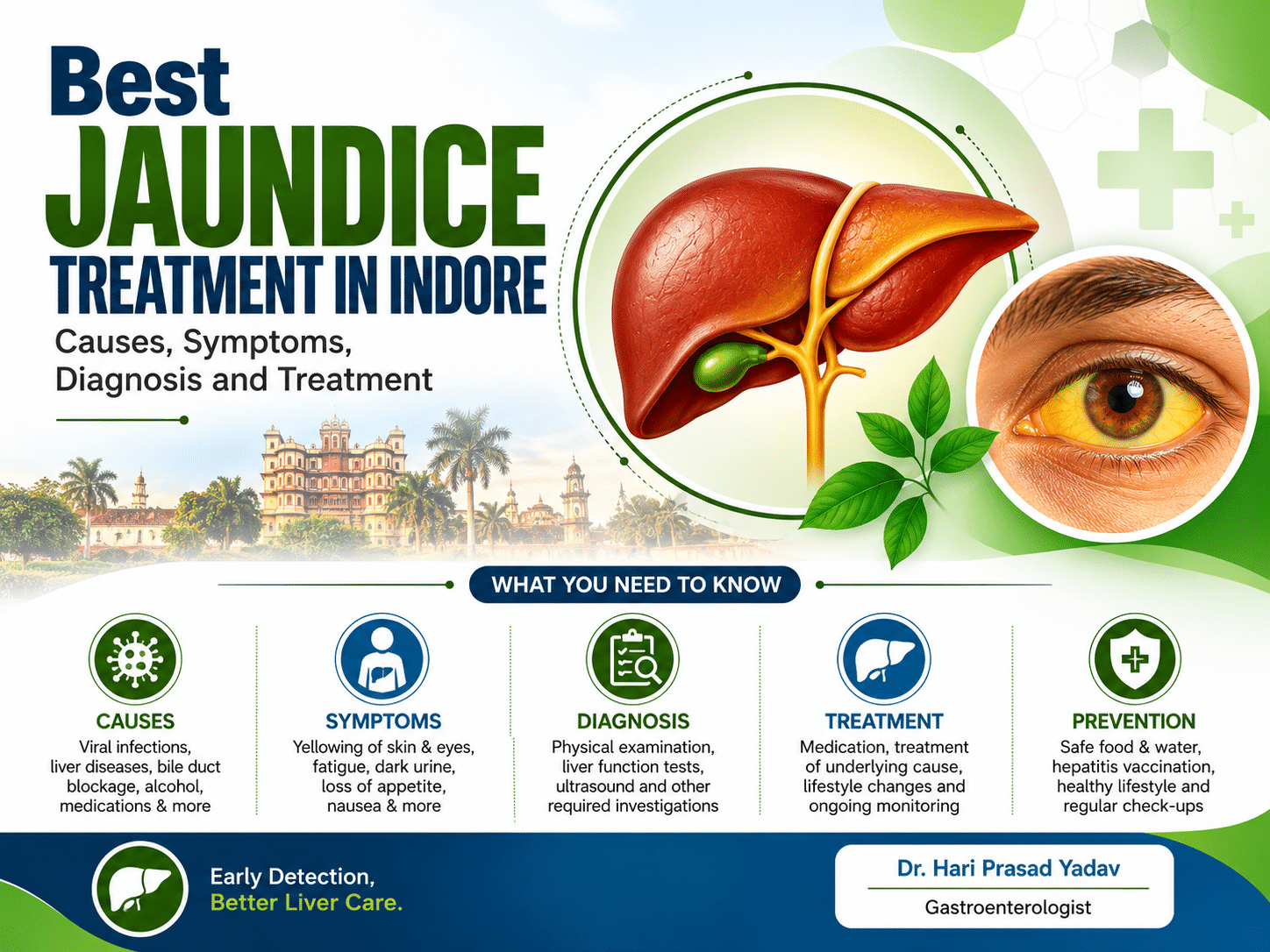
Best Jaundice Treatment in Indore: Causes, Symptoms, Diagnosis and Treatment
Jaundice is a condition in which the skin or the whites of the eyes become yellow because bilirubin builds up in the body. Bilirubin is produced when red blood cells are broken down, and the liver normally processes it so that it can leave the body through bile. When bilirubin production, processing, or drainage is disrupted, jaundice can occur. Jaundice can develop because of several conditions, including hepatitis, liver disease, gallstones, bile duct obstruction, alcohol-associated liver disease, certain medicines, and disorders that cause increased breakdown of red blood cells. Because the causes can be very different, Jaundice Treatment in Indore should be based on identifying the underlying reason for the increased bilirubin rather than treating the yellow discoloration alone. Dr. Hari Prasad Yadav, a Gastroenterologist and Liver Specialist in Indore, evaluates jaundice in relation to the liver, bile ducts, gallbladder, pancreas, and other possible causes. Understanding the causes, symptoms, diagnostic tests, and treatment options can help patients recognize when medical evaluation is important. What Is Jaundice? Jaundice occurs when bilirubin accumulates in the blood and tissues, causing a yellowish appearance of the skin and the whites of the eyes. Bilirubin is a yellow substance formed when the body breaks down old red blood cells. The liver processes bilirubin and helps eliminate it through bile. Problems at different stages of this process can result in jaundice. Jaundice may be associated with problems involving: The liver Gallbladder Bile ducts Red blood cells Pancreas Certain medicines Alcohol-related liver injury Therefore, jaundice should not automatically be assumed to be caused by one specific liver condition. What Causes Jaundice? There are many possible causes of jaundice. The underlying cause may involve increased bilirubin production, impaired processing by the liver, or blockage of bile flow. Common causes include: Viral hepatitis Alcohol-associated liver disease Fatty liver-related liver injury Gallstones Bile duct obstruction Pancreatic disorders Autoimmune liver diseases Certain medicines Genetic conditions such as Gilbert syndrome Increased breakdown of red blood cells Cirrhosis Certain liver or bile duct cancers The exact cause needs to be established through medical history, examination, blood tests, and sometimes imaging. Jaundice and Liver Disease The liver plays a central role in processing bilirubin. When liver cells become inflamed or damaged, the liver may not process and remove bilirubin effectively. Conditions such as hepatitis, cirrhosis, alcohol-associated liver disease, and other liver disorders can therefore cause jaundice. People with chronic liver disease may also develop other symptoms depending on the severity of liver damage, including fatigue, itching, abdominal swelling, leg swelling, or changes in urine and stool color. For this reason, a Jaundice Specialist in Indore may need to evaluate not only bilirubin levels but also the overall condition of the liver. Symptoms of Jaundice The most recognizable symptom of jaundice is yellow discoloration of the skin and whites of the eyes. Other symptoms can occur depending on the underlying cause. Common symptoms may include: Yellow eyes Yellowish skin Dark urine Pale or light-colored stools Itchy skin Fatigue Loss of appetite Nausea or vomiting Abdominal discomfort Fever in some infections Unexplained weight loss in some conditions Dark urine and pale stools can occur when bilirubin or bile flow is affected. Not every person with jaundice will experience all of these symptoms. Why Does Urine Become Dark During Jaundice? Dark or tea-colored urine can occur when bilirubin levels increase and bilirubin is excreted through the urine. Pale or clay-colored stools may occur when bile is not reaching the intestine normally, such as with certain bile duct obstructions. These changes can provide useful clues to doctors when determining the possible cause of jaundice. Types of Jaundice Jaundice can be broadly understood according to where the problem occurs in the bilirubin pathway. Prehepatic Jaundice This can occur when red blood cells are being broken down more rapidly than usual, producing more bilirubin than the liver can process. Conditions associated with increased red blood cell breakdown can therefore contribute to jaundice. Hepatic Jaundice Hepatic jaundice occurs when the liver itself has difficulty processing bilirubin. Possible causes include: Hepatitis Alcohol-associated liver disease Fatty liver-related liver injury Autoimmune hepatitis Cirrhosis Certain medicines Other liver disorders Posthepatic Jaundice Posthepatic jaundice can occur when bile flow is obstructed after bilirubin has been processed by the liver. Possible causes include: Gallstones Bile duct narrowing Bile duct disorders Pancreatic conditions Certain tumors Gallstones that block bile ducts can cause jaundice along with abdominal pain, fever, chills, dark urine, or light-colored stools and require prompt medical evaluation. How Is Jaundice Diagnosed? Diagnosis begins with understanding the patient’s symptoms, medical history, medicines, alcohol use, previous liver conditions, and other health problems. A doctor may perform a physical examination and order blood tests and imaging studies. Medical history may include questions about: Recent illness Hepatitis exposure Alcohol consumption Current medicines Herbal supplements Previous liver disease Gallstones Abdominal pain Weight changes Family history Recent travel or infections The diagnosis is directed toward finding the cause of the elevated bilirubin rather than simply confirming jaundice. Dr. Hari Prasad Yadav may assess the patient’s clinical history and relevant digestive or liver-related factors when evaluating jaundice and determining which investigations may be appropriate. Blood Tests for Jaundice Blood testing is an important part of Jaundice Treatment in Indore because it can help determine whether the problem is related to the liver, bile ducts, or another condition. Tests may include: Total bilirubin Direct bilirubin Indirect bilirubin ALT AST Alkaline phosphatase GGT Albumin Complete blood count Other tests based on suspected cause Bilirubin testing can help identify jaundice and investigate possible liver disease, bile duct obstruction, hepatitis, medication-related injury, or increased breakdown of red blood cells. Ultrasound for Jaundice An abdominal ultrasound may be recommended when doctors need to examine the liver, gallbladder, or bile ducts. It can help identify findings such as: Gallstones Bile duct dilation Liver abnormalities Gallbladder abnormalities Certain structural changes If additional information is required, doctors may recommend CT, MRI, MRCP, or other imaging depending on the suspected cause. ERCP in Jaundice Endoscopic retrograde cholangiopancreatography, commonly known as ERCP,
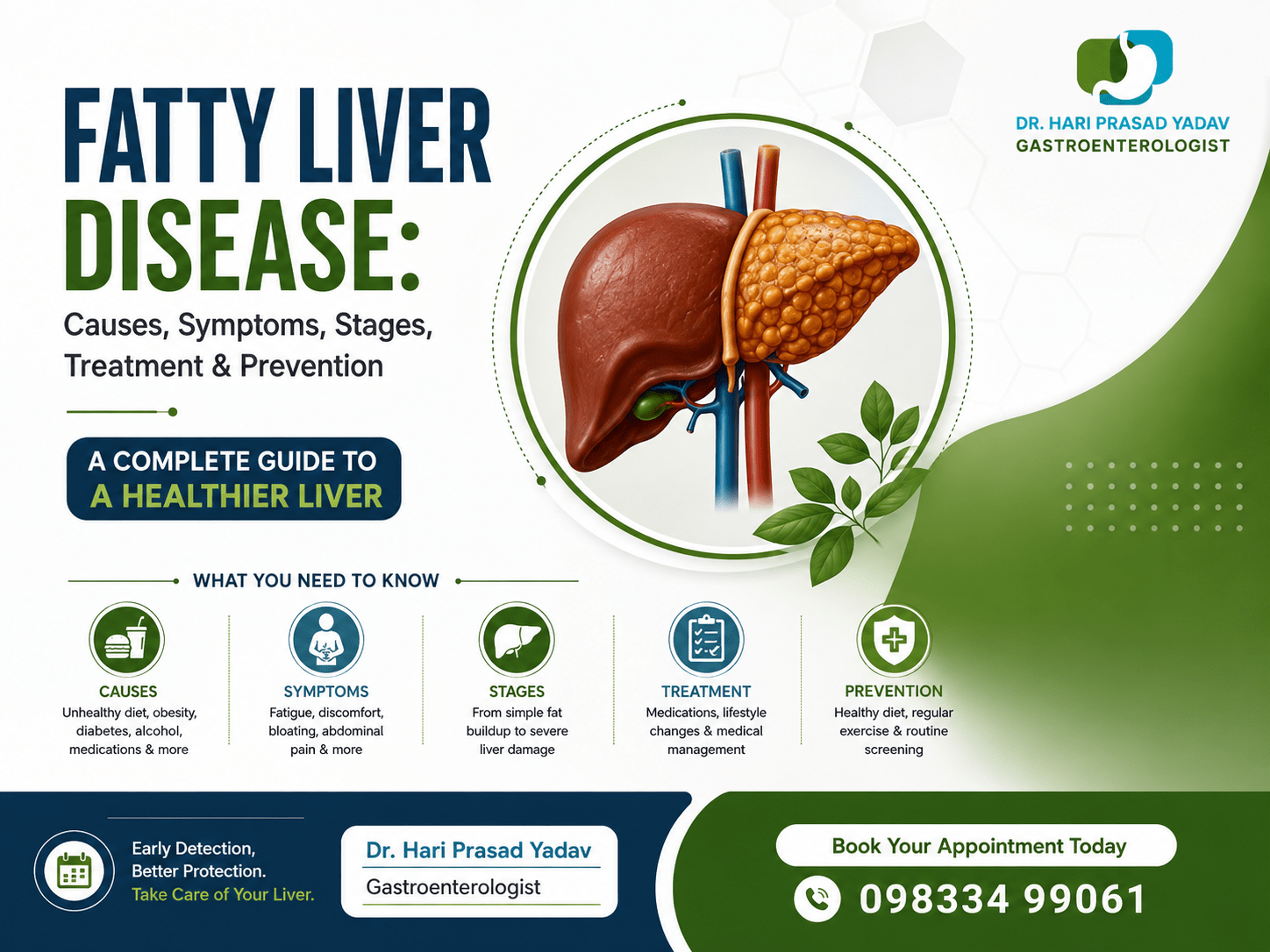
Fatty Liver Disease: Causes, Symptoms, Stages, Treatment and Prevention
Fatty Liver Treatment in Indore disease occurs when excess fat accumulates in the liver. It is often associated with metabolic conditions such as obesity,
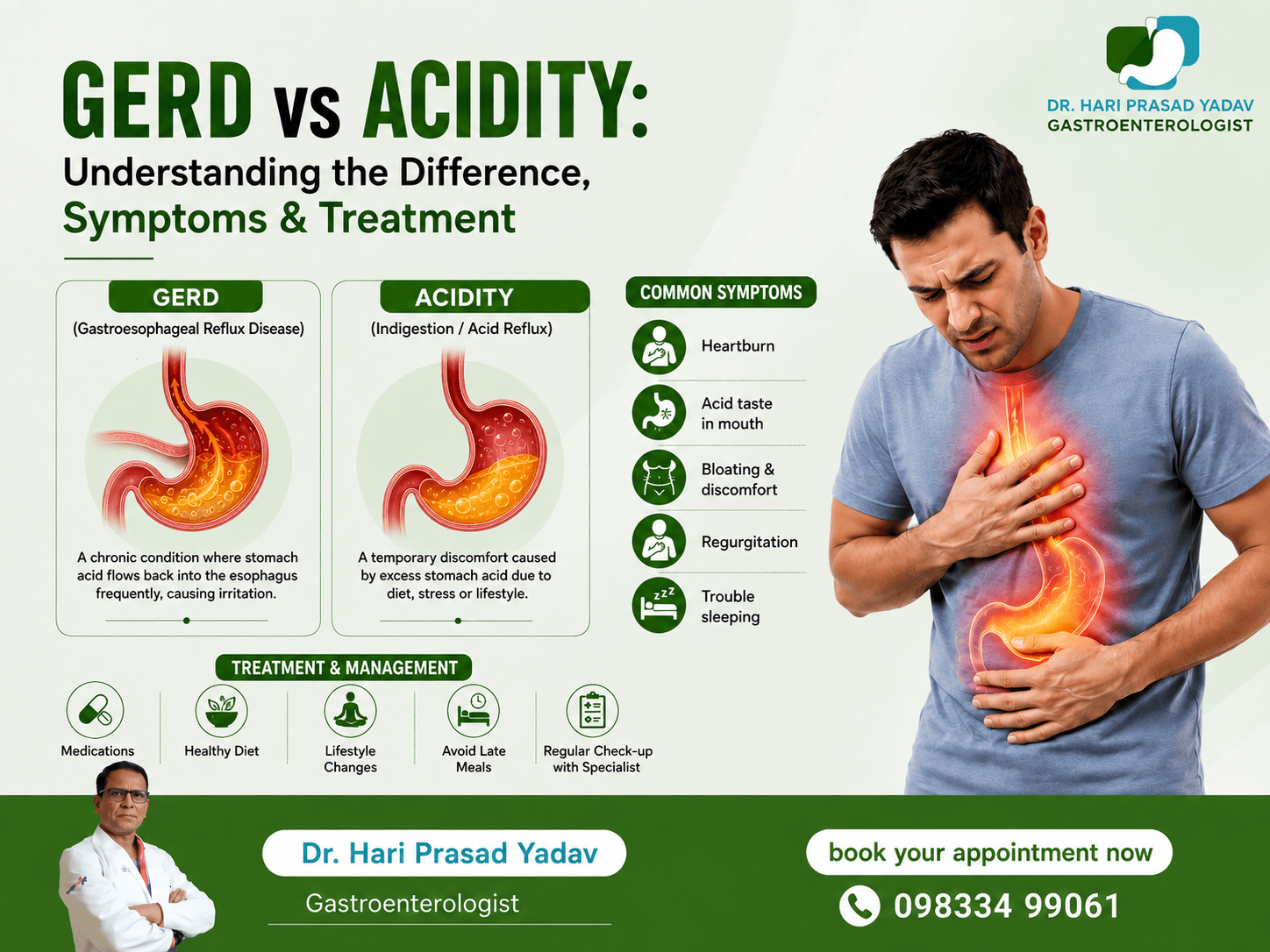
GERD vs Acidity: Understanding the Difference, Symptoms & Treatment – Dr. Hari Prasad Yadav
Many people experience heartburn, acidity, sour taste, or a burning sensation in the chest after eating. These symptoms are often considered ordinary acidity,
